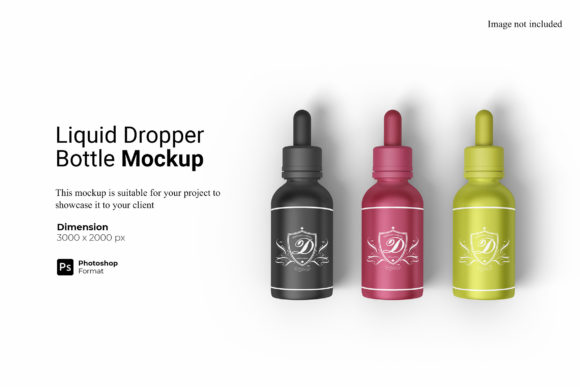
Elevate Your Brand Identity with a Liquid Dropper Bottle Mockup
In the competitive world of cosmetic and pharmaceutical branding, first impressions are everything. When a consumer reaches for a serum, essential oil, or medical tincture, they are not just buying a product; they are buying an experience defined by trust, quality, and aesthetics. For designers and brand owners, translating a two-dimensional logo or label concept into a tangible, three-dimensional reality is one of the most critical steps in the development process. This is where a high-quality liquid dropper bottle mockup becomes an indispensable tool in your creative arsenal.
A mockup is more than just a digital image; it is a bridge between abstract design and physical production. By utilizing a realistic 3D display, you can showcase your designs professionally, ensuring that every shadow, highlight, and texture accurately reflects how your final product will look on a retail shelf or in a customer’s hand. This article explores why using a specialized PSD Photoshop mockup for liquid dropper bottles is essential for modern branding, how it streamlines your workflow, and why it matters for your business’s success.
The Power of Visual Realism in Packaging Design
Why does realism matter so much in digital design? The human brain processes visual information faster than any other type of data. When potential clients, investors, or customers view your packaging design, they need to feel confident that the product exists and meets high standards. A flat, 2D representation often fails to convey the depth, material quality, and ergonomic feel of a glass or plastic dropper bottle.
A realistic 3D display solves this problem by simulating real-world lighting conditions. It allows you to see how your typography interacts with the curvature of the glass, how the ink sits against the background color, and how the dropper cap aligns with the bottle neck. This level of detail helps identify potential design flaws before they become expensive manufacturing errors. For instance, if your label text is too small or the contrast is insufficient against the glass tint, you will spot these issues immediately in a high-resolution mockup rather than after printing thousands of units.
Building Trust Through Professional Presentation
Professionalism is synonymous with reliability. In the beauty and wellness industries, consumers are increasingly savvy. They associate sleek, polished packaging with effective formulations and ethical sourcing. By presenting your work in a liquid dropper bottle mockup, you signal that you pay attention to detail. Whether you are pitching to a boutique retailer or launching a direct-to-consumer e-commerce site, the visual fidelity of your assets directly impacts perceived value.
Consider the difference between a sketch of a serum bottle and a photorealistic render. The sketch communicates an idea; the render communicates a product. This distinction is crucial for marketing campaigns, social media advertisements, and portfolio presentations. A well-executed mockup elevates your brand from "startup" to "established player," fostering immediate trust with your audience.
Streamlining Your Workflow with Smart Objects
One of the most significant advantages of using a digital mockup over traditional photo editing techniques is efficiency. Modern mockups are typically provided in PSD Photoshop format and utilize advanced smart-object features. But what exactly does this mean for you as a designer?
Smart objects are layers within a Photoshop file that allow you to embed images non-destructively. Instead of manually warping, masking, and adjusting the perspective of your label to fit the curve of a bottle—a process that can take hours—you simply double-click the smart object layer. This opens a new window where you can paste your flat design. Once you save and close that window, the mockup automatically updates, applying your design to the bottle with perfect perspective, lighting, and shadows.
This feature enables you to replace current designs with your own within seconds. If you are working on multiple variations of a label—perhaps testing different color palettes or typography styles—you can generate dozens of unique presentations in minutes. This speed allows for rapid iteration and collaboration, making it easier to get feedback from stakeholders without getting bogged down in technical editing tasks.
Accessibility for All Skill Levels
You do not need to be a master graphic designer to use these tools effectively. Many mockup packages come with a PDF help guide that walks you through the installation and usage process step-by-step. These guides clarify common misunderstandings, such as how to resize elements without losing quality or how to adjust the opacity of shadows for a more natural look. Because the heavy lifting is done by the pre-made 3D model, you can focus on the creative aspects of your design—the color theory, the layout, and the messaging—rather than the mechanics of rendering.
Technical Specifications and Customization Options
When selecting a mockup for your project, technical specifications play a vital role in the final output quality. A premium liquid dropper bottle mockup should offer high resolution and flexibility to suit various use cases, from web banners to large-format print materials.
- High Resolution: Look for files that are at least 3000x2000 px in size. This ensures that your design remains crisp and clear even when viewed on high-density displays or printed at medium sizes.
- Print-Ready Quality: A resolution of 300 dpi (dots per inch) is the industry standard for professional printing. This density prevents pixelation and ensures that fine details in your typography and graphics are preserved.
- Changeable Background Color: Versatility is key. A good mockup allows you to change the background color easily. This is useful for creating cohesive brand kits, designing specific ad creatives for different platforms (e.g., a white background for Amazon, a dark background for Instagram), or simply isolating the product for a clean, minimalist presentation.
These technical features ensure that your mockup is not just a quick preview but a versatile asset that can be used across all your marketing channels. The ability to tweak the background also helps in understanding how your product performs in different environments, adding another layer of strategic insight to your design process.
Common Misconceptions About Mockups
While mockups are powerful tools, there are some common misconceptions that can lead to frustration or misuse. One prevalent assumption is that a mockup is a substitute for a physical prototype. While a 3D mockup is incredibly accurate, it cannot replicate the tactile experience of holding a bottle, the weight of the glass, or the mechanical action of the dropper pump. Therefore, it is always recommended to create a physical sample before finalizing mass production, especially if the mechanism of the dropper is complex.
Another misconception involves the images used in previews. Often, the stunning lifestyle shots seen in mockup listings are for illustration purposes only. The photos used in the preview are not included in the download package. This means you must provide your own images to populate the mockup. However, this is actually a benefit, as it gives you complete control over the content. You are not limited to generic placeholder text; you are showcasing your actual brand identity.
Integrating Mockups into Your Creative Process
To get the most out of your liquid dropper bottle mockup, consider integrating it into every stage of your design journey. Start by using low-fidelity versions during brainstorming sessions to test basic concepts. As your design matures, switch to high-resolution, 300 dpi versions for client presentations and internal reviews. Finally, use the best-rendered images for your website, social media profiles, and press kits.
This consistent application of high-quality visuals reinforces your brand message and ensures that your product stands out in a crowded marketplace. By leveraging the ease of smart objects and the realism of 3D displays, you empower yourself to present your ideas with confidence and clarity.
Conclusion
In conclusion, a liquid dropper bottle mockup is far more than a simple template; it is a strategic asset that enhances the professionalism, efficiency, and impact of your packaging design. By offering realistic 3D displays, easy-to-use smart-object features, and high-resolution outputs, these tools bridge the gap between concept and reality. Whether you are a seasoned graphic designer or a business owner launching your first skincare line, investing time in mastering these mockups will pay dividends in the way your brand is perceived. Embrace the power of visual realism, streamline your workflow, and present your products with the polish they deserve.