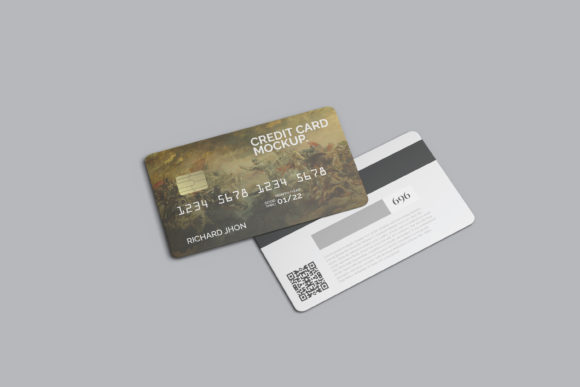
Floating Credit Card Mockup
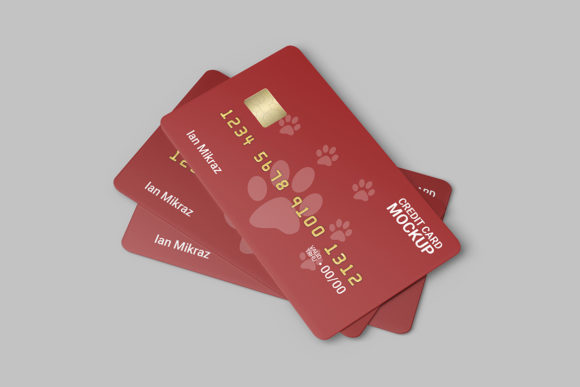
In the digital age, visual presentation is often the deciding factor between a product being noticed and being ignored. For designers, marketers, and entrepreneurs, the ability to showcase a credit card design—whether for a fintech startup, a loyalty program, or a premium membership tier—in a realistic context is crucial. This is where a Floating Credit Card Mockup becomes an indispensable asset in your creative workflow. It transforms flat, two-dimensional vector files into immersive, three-dimensional representations that convey quality, trust, and modernity.
Unlike static image placements on a white background, floating mockups introduce depth, perspective, and lighting effects that mimic real-world photography. This level of realism helps stakeholders visualize the final product more accurately, reducing ambiguity during the approval process and enhancing the perceived value of the brand identity. By integrating this tool into your design pipeline, you streamline the transition from concept to client presentation, ensuring that every detail, from corner radius to holographic foil placement, is communicated effectively.
The Role of Realistic 3D Displays in Design Presentation
When presenting a new card design, the medium matters as much as the message. A standard JPEG or PNG file placed on a slide deck can feel disconnected from reality. In contrast, a high-fidelity 3D display provides context. It answers the question: "What does this look like in someone's hand?" or "How does it sit on a payment terminal?" This contextualization is vital for decision-makers who need to assess not just the color palette, but the tactile feel and visual weight of the design.
A Floating Credit Card Mockup serves as a bridge between abstract design concepts and tangible outcomes. It allows you to test how typography scales at small sizes, how contrasting colors interact under simulated lighting, and how negative space contributes to overall legibility. For professionals in marketing and branding, these insights are critical before moving to print production, where errors are costly and irreversible. By using a realistic 3D display early in the process, you catch potential issues with alignment, contrast, and hierarchy, saving time and resources later.
Technical Specifications and Workflow Integration
The efficiency of any design tool is determined by its technical specifications and ease of integration into existing software ecosystems. The Floating Credit Card Mockup described here is delivered in PSD (Photoshop) format, which is the industry standard for raster graphics editing. This compatibility ensures that it works seamlessly within Adobe Creative Cloud workflows, a suite used by the vast majority of professional designers and agencies.
One of the most significant advantages of this specific mockup is its resolution and dimensions. With a size of 3000x2000 pixels and a resolution of 300 DPI (dots per inch), the file is optimized for both screen-based presentations and high-quality print outputs. The 300 DPI specification is particularly important for print-ready materials, ensuring that text remains crisp and images do not appear pixelated when scaled down for business cards or brochures. For digital use, such as social media ads or website headers, the high resolution allows for cropping and zooming without loss of clarity, providing flexibility in layout design.
The inclusion of a PDF help guide further reduces the learning curve. While many designers are proficient in Photoshop, not everyone is familiar with advanced layer management or smart-object manipulation. A clear, concise guide ensures that even those with intermediate skills can utilize the template effectively, minimizing friction in the adoption process. This support structure is essential for teams where multiple members may need to generate variations of the same design quickly.
Leveraging Smart-Objects for Rapid Iteration
The core functionality of this mockup relies on Photoshop’s Smart-Object feature. Understanding and utilizing smart-objects is key to maximizing efficiency. A smart object is a container that holds raster or vector data, allowing you to apply transformations and filters non-destructively. In the context of a credit card mockup, this means you can replace the default design with your own artwork without altering the underlying 3D structure, shadows, or reflections.
To implement this in your workflow, follow these practical steps:
- Open the File: Launch the PSD file in Adobe Photoshop. Ensure that your version of Photoshop supports the features used in the template.
- Locate the Smart Object: In the Layers panel, identify the layer labeled for design insertion. It is often named intuitively, such as "Your Design Here" or "Card Face."
- Double-Click to Edit: Double-clicking the thumbnail of the smart object opens a new tab containing the editable artboard.
- Insert Your Design: Drag and drop your credit card design into this new window. Resize and position it to fit the designated area. Save the changes (Ctrl+S / Cmd+S).
- View Results: Return to the main document. The mockup will automatically update, applying your design to the 3D surface with correct perspective and lighting.
This process eliminates the need for manual warping, masking, or blending mode adjustments, which are prone to error and time-consuming. By automating the integration of your design into the 3D scene, you reduce the risk of misalignment and ensure consistency across multiple variations. This is particularly useful when presenting a range of options to clients, such as different colorways or tiered membership designs.
Customization and Contextual Flexibility
A versatile mockup should adapt to various presentation needs. One notable feature of this Floating Credit Card Mockup is the ability to change the background color. This capability allows you to tailor the visual environment to match your brand guidelines or the mood of the presentation. For instance, a dark background might emphasize a sleek, premium black card, while a light, neutral background could highlight a vibrant, youthful design.
This customization extends beyond simple color swaps. By adjusting the background, you can control the contrast and focus of the image. A monochromatic background keeps the attention solely on the card, whereas a textured or gradient background can add atmosphere without distracting from the primary subject. This flexibility is valuable for creating cohesive marketing materials, such as email newsletters, landing pages, or pitch decks, where consistent branding is paramount.
Furthermore, the mockup’s isolation of the card element makes it easy to composite into other scenes. You can place the rendered card onto a desk, in a hand, or against a architectural backdrop using additional Photoshop techniques. This modularity enhances the mockup’s utility, allowing it to serve as a building block for larger campaigns rather than just a standalone image.
Best Practices for Implementation and Quality Control
To get the most out of this tool, it is important to approach its use with a structured mindset. Preparation is key. Before opening the mockup, ensure your source design is finalized and exported at the appropriate scale. Working with vector formats (such as AI or EPS) for the initial design allows for infinite scalability, which is beneficial when testing how fine details render on the card surface.
Organization within the Photoshop file is another critical factor. Even though the template comes pre-organized, maintaining clean layers and naming conventions in your own working copies prevents confusion, especially when collaborating with team members. Regularly saving versions of your work allows for easy rollback if a particular design iteration does not meet expectations.
Quality control should involve checking the design against real-world constraints. Does the logo remain legible when shrunk? Do the security features align correctly with the card’s geometry? Use the high-resolution output to zoom in and inspect edges and corners. Since the mockup simulates realistic lighting, pay attention to how shadows fall across embossed elements or text. If the design includes holographic effects or spot UV coatings, consider whether the mockup’s lighting model accurately represents these finishes. If not, additional post-processing may be required to enhance realism.
Long-Term Value and Professional Growth
Investing in high-quality assets like a Floating Credit Card Mockup pays dividends over time. As you build a portfolio or manage ongoing brand projects, having a reliable library of presentation tools accelerates your workflow. Instead of spending hours creating custom renders for each new project, you can produce professional-grade visuals in minutes. This efficiency allows you to take on more clients, iterate faster, and respond swiftly to market trends.
Moreover, the professionalism conveyed by realistic mockups enhances your credibility. Clients and employers recognize the difference between a rough draft and a polished presentation. By consistently delivering high-quality visualizations, you demonstrate attention to detail and a commitment to excellence. This reputation can lead to repeat business, referrals, and opportunities for higher-level projects.
It is also worth noting that the assets used in preview images are typically for illustration purposes only. When using the mockup, always replace them with your own original content to avoid copyright issues and to ensure the final output reflects your unique brand identity. This practice reinforces intellectual property rights and maintains the integrity of your creative work.
In conclusion, the Floating Credit Card Mockup is more than just a template; it is a strategic tool for effective communication and efficient execution. By leveraging its 3D capabilities, smart-object functionality, and customizable features, you can elevate your design presentations, streamline your workflow, and deliver results that resonate with your audience. Whether you are a freelancer pitching a new brand identity or a corporate designer launching a rewards program, this resource provides the foundation for professional, impactful visual storytelling.